
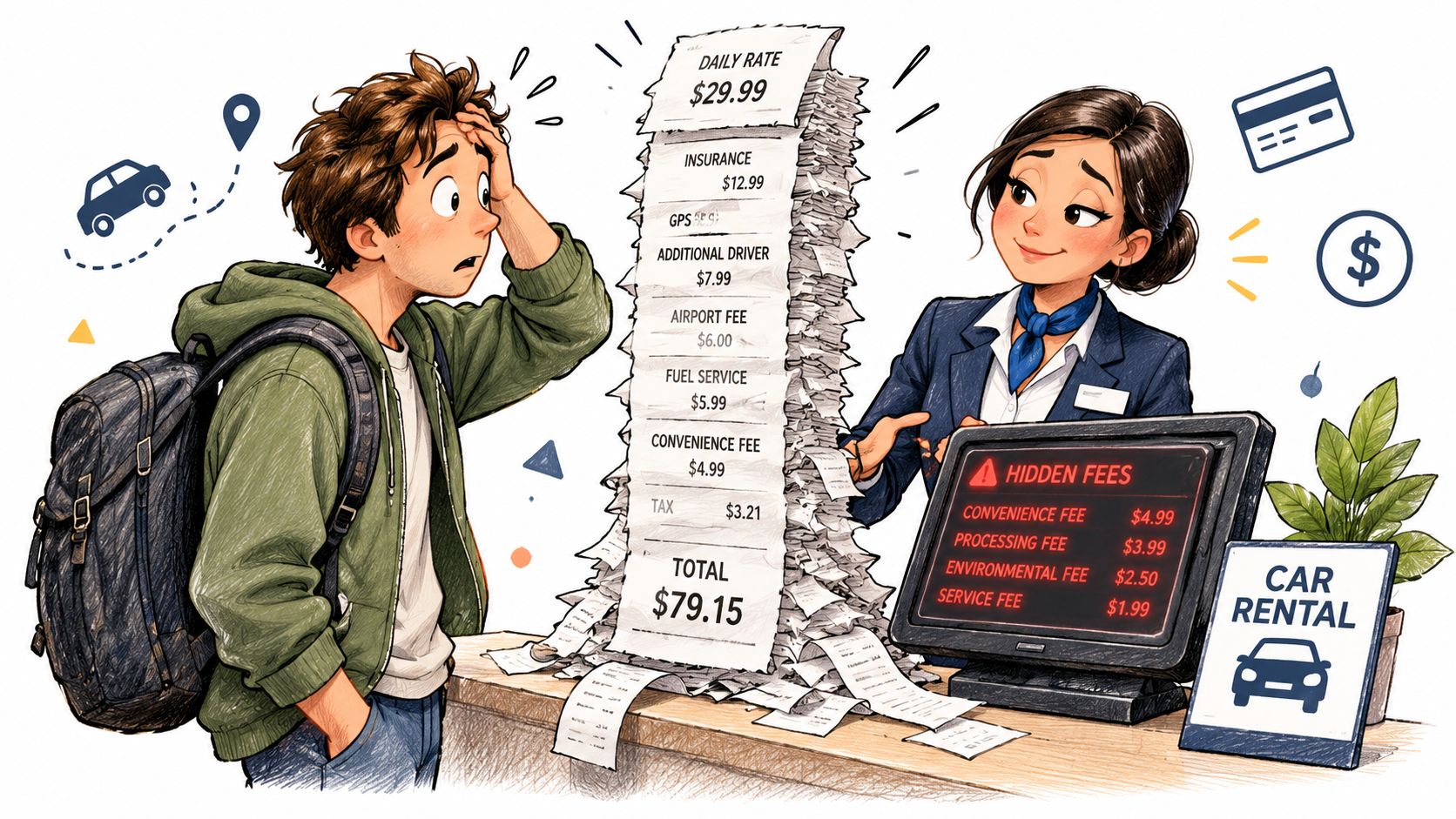
The cheapest headline rate is often the most expensive final bill, because hidden fees can turn a bargain into a bad deal. Comparing car rental prices works best when you normalize quotes to the same pickup point, dates, vehicle class, mileage terms, and protection level, then compare the total you would pay.
A traveler usually learns this the hard way at the counter. The online rate looked fine, the booking confirmation felt settled, and then the agent started adding insurance, location charges, fuel rules, and driver-related fees that weren't obvious at search time. That's why a low daily rate is only useful if it survives a full comparison of the actual bill.
Renting a bike can be a useful fallback on some trips, but for cars the same principle applies, compare the full cost, not the teaser price.
Table of Contents
- The Hidden Cost of Cheap Rental Car Rates
- Using Aggregators and Filters Correctly
- Decoding Insurance and Fuel Policies
- Normalizing Quotes for Accurate Comparison
- Checking Direct Provider Websites
- Final Checklist Before You Book
The Hidden Cost of Cheap Rental Car Rates
The sharpest price on the screen can still be the worst deal in the room. I've seen travelers lock in a low daily rate, then discover the final bill swelled once the desk added insurance, airport surcharges, fuel rules, and extra-driver charges. A rental company can make a booking look cheap just by leaving out the parts that are easiest to miss when you're moving quickly.
A 2024 analysis of more than 480 rental-car prices found that location alone can swing weekly cost sharply, with Miami averaging $377.07 and the San Francisco Bay Area averaging $544.10, a difference of about 44% (Ken Research). That same kind of spread shows up in airport markets too, which is why a quote that looks competitive in one neighborhood can be poor value in another.
What usually gets left out
The counter staff doesn't need to hide anything dramatic for the bill to rise. They just need to add several smaller items that weren't obvious in the search result.
Practical rule: if the quote isn't showing the full payable amount for your exact trip, it isn't the real price yet.
Use the fare card as a starting point, then check whether the total includes mandatory insurance, fuel return rules, and driver-related surcharges. The way a rate is displayed often matters more than the number itself, especially when a website pushes a headline price before the fine print. That's why a careful search feels slower at first, but saves time and frustration later.
Using Aggregators and Filters Correctly

Aggregators are useful because they put a crowded market on one screen. They fail when you treat the first low number as the genuine offer. The job is to force the search into a like-for-like comparison, then read the total with the same skepticism you'd use at the counter.
Start with the exact pickup and drop-off city, the same dates, and the same rental length. Then tighten the search one step at a time. On Easy Travel Bookings, set airport versus downtown first, then lock in the vehicle class, mileage terms, and protection level before you compare totals. If one quote includes unlimited mileage and another caps it, those are different products even when the daily rate looks better on the capped option.
The value of a metasearch tool is coverage. Easy Travel Bookings says it brings together prices from over 70 travel providers, combining large booking sites with smaller local systems and showing pricing without extra charges or hidden fees, so travelers can compare more of the market at once.
A practical workflow keeps the search honest:
- Start with the location filter. Airport and downtown branches often price differently, so keep them separate.
- Match the vehicle class exactly. Economy, compact, SUV, and premium can carry very different totals.
- Check mileage terms before you compare. Unlimited mileage and limited mileage are not the same offer.
- Compare protection levels side by side. A low base rate with thin coverage can cost more once the booking is complete.
Pay attention to what the tool leaves vague. If the quote looks cheap but the included coverage is unclear, assume there is more to review. A good aggregator saves time by narrowing the field, but the final check still belongs to the traveler.
A quick scan becomes more reliable when you pause on the details that change the final bill. The rate card is the starting point, not the answer.
Decoding Insurance and Fuel Policies
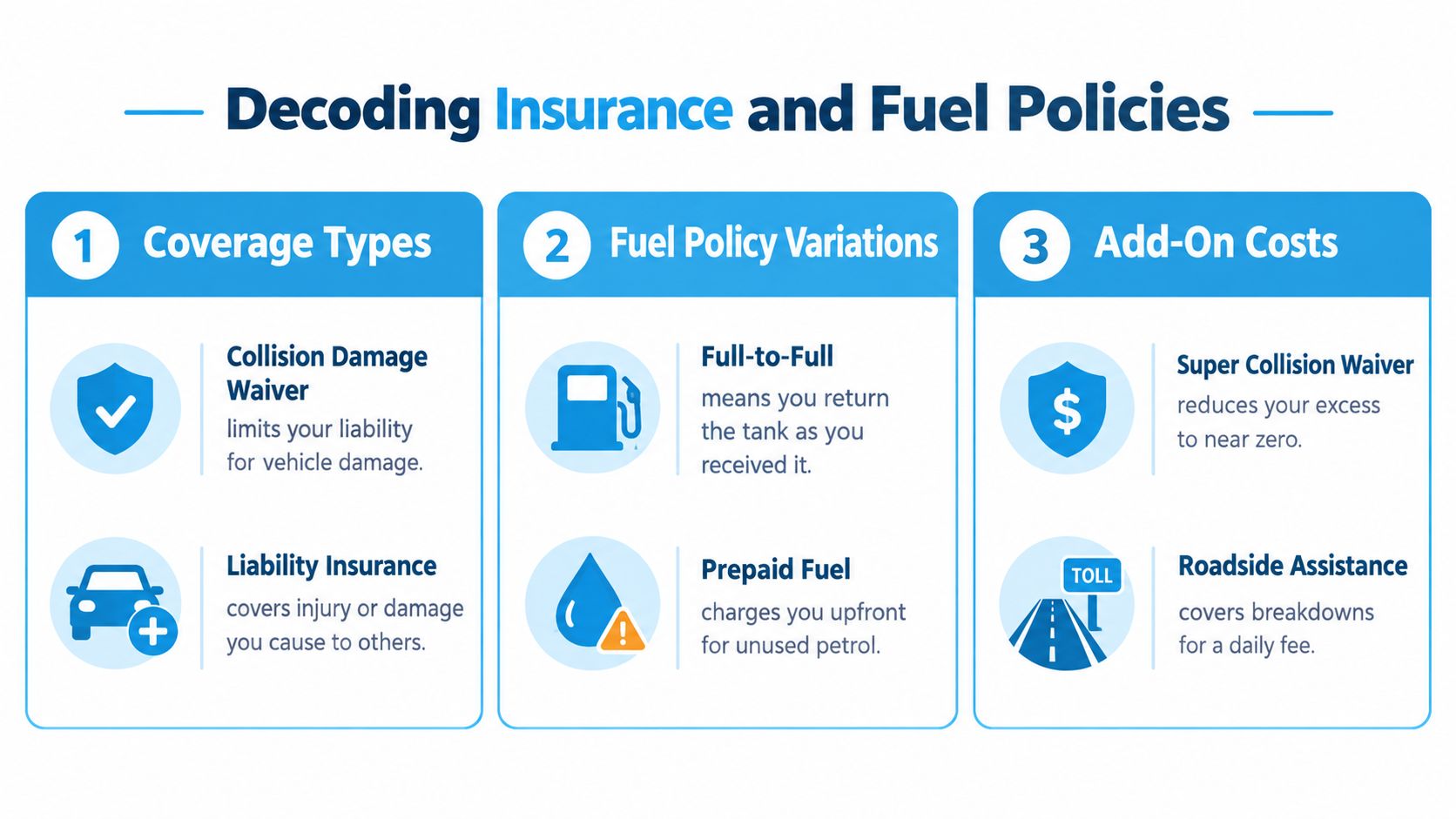
Insurance and fuel are where many rental companies make comparison shopping messy. The base rate might be reasonable, but the final bill grows once the booking adds coverage you don't need, or fuel terms that don't fit your trip. A traveler who already has card coverage or personal car insurance should still check what the rental company is trying to sell, because the right answer depends on the country, the vehicle, and the exact terms of the pickup.
Consumer guidance notes that rental companies often require security deposits of about $200 to $500, while additional-driver fees commonly run $10 to $13 per day and under-25 surcharges can be $20 to $30 per day, with some locations charging even more (Skyscanner advice). Those fees matter because they affect the actual cost of choosing one offer over another, even before you reach the road.
Coverage you should read before you click
The names vary by brand, but the logic is similar. Collision coverage reduces what you're liable for if the car is damaged, while liability coverage addresses harm or damage you cause to others. If the site doesn't make that distinction clear, the quote is too vague to trust.
Fuel policy deserves the same scrutiny. A full-to-full policy is simple, you return the car with the tank as you received it. A prepaid fuel option can look convenient, but it only makes sense if you'll use most of what you're paying for, otherwise you're financing unused petrol.
The cheapest-looking offer is often the one that asks you to absorb the most risk at pickup.
That risk can be financial, not just mechanical. A lower base rate may come with stricter age rules, a larger deposit, or more aggressive add-on selling at the desk. Once those are in play, the price comparison is no longer about the rate alone, it's about the whole booking experience.
Normalizing Quotes for Accurate Comparison
A real comparison starts when every quote is rebuilt into the same frame. If one price reflects an airport pickup, another reflects downtown, and a third hides a different protection level, the spreadsheet is lying to you. The goal is to compare the same trip, not the same website.
A June 2024 analysis of more than 480 rental-car prices found that airport pick-ups averaged $86 more than downtown locations for seven-night rentals, about 18.3% higher, which makes location normalization essential (Monde du Voyage). The same analysis also found that weekly rentals booked 91 days ahead averaged $555, while bookings made seven days ahead averaged $481, showing why price checks should be repeated across lead times rather than treated as fixed.
A simple normalization process
Start with the basics, then strip away the noise.
-
Match the pickup and drop-off city.
Don't compare an airport branch to a downtown branch and call it a fair fight. -
Use the same dates and duration.
A five-day trip and a seven-day trip can have very different rate structures. -
Hold the vehicle class constant.
Economy with economy, SUV with SUV, compact with compact. -
Compare the same protection level.
If one quote includes broader coverage, price that coverage into the other quote before ranking it. -
Check add-ons against the final bill.
Young-driver fees, extra-driver charges, fuel policies, and one-way costs can erase a small headline advantage.
A comparison only becomes useful once the final payable amount is aligned. If you're reviewing several offers, build your own short list around the normalized total and ignore any quote that can't be translated into the same terms. That is the difference between shopping and guessing.
Checking Direct Provider Websites
Aggregators are excellent for the first pass, but they're not the last word. Direct provider sites can sometimes show better cancellation terms, loyalty benefits, or a cleaner explanation of what's included. If you already know your preferred brand, it's smart to check whether booking direct changes the total or improves the rules around changes and refunds.
There are also cases where the direct site wins on flexibility. Loyalty members may see better treatment, easier upgrades, or fee waivers that a third-party screen doesn't surface well. A direct booking can also be better when the supplier is offering a member rate, an advance purchase option, or a package that only appears on its own site.

The main reason to check both paths is simple. A search platform gives you breadth, while the provider gives you control over the fine print. For a trip where the deposit, insurance, or cancellation terms matter more than the starting price, direct booking can be the cleaner choice.
If you want to explore provider-side inventory after comparing the market, this car rental collection is a practical place to look. Use it as a second pass, not a replacement for comparison shopping, because the strongest booking decisions usually come from checking both the aggregator view and the supplier view before you pay.
Final Checklist Before You Book
Before you pay, compare the final bill, not the teaser rate. Check that pickup and drop-off locations match your plan, the vehicle class is the same across quotes, and the insurance cover is clear. Then confirm the fuel rule, deposit amount, driver fees, and any one-way charges.
If you are comparing the car against other ground options, this airport transfer guide can help you judge whether a rental still makes sense.
Before you book, ask yourself these four questions:
-
Is this the all-in total?
If not, keep comparing until it is. -
Does the quote show the same coverage level as the others?
If it doesn't, the lower price may be incomplete. -
Are the pickup location and booking window comparable?
Small differences there can change the bill more than expected. -
Have I checked the deposit and add-on fees?
Those are often the fastest way for a cheap quote to become an expensive one.